The Texas Grid and Energy Reliability
The Electric Reliability Council of Texas (ERCOT) operates the power grid serving approximately 90% of the state's electric load. As an isolated grid with limited interconnections to neighboring systems, ERCOT faces unique challenges during periods of peak demand — most acutely during extreme summer heat and winter cold events. The consequences of grid stress, as demonstrated during Winter Storm Uri in February 2021, can be severe and prolonged.
For Texas homeowners, particularly those in the Rio Grande Valley where summer temperatures regularly exceed 100°F, energy reliability is a genuine safety consideration — not merely a matter of convenience.
Why Solar-Only Systems Cannot Provide Outage Protection
A common misconception is that solar panels continue to power a home when the grid goes down. In practice, standard grid-tied solar inverters are required by electrical code to disconnect from the grid during an outage. This anti-islanding protection exists to safeguard utility workers who may be repairing distribution lines. Without a battery system, a home with solar panels will lose power just as a home without solar does.
Battery storage changes this dynamic entirely.
How Solar and Battery Systems Respond to Outages
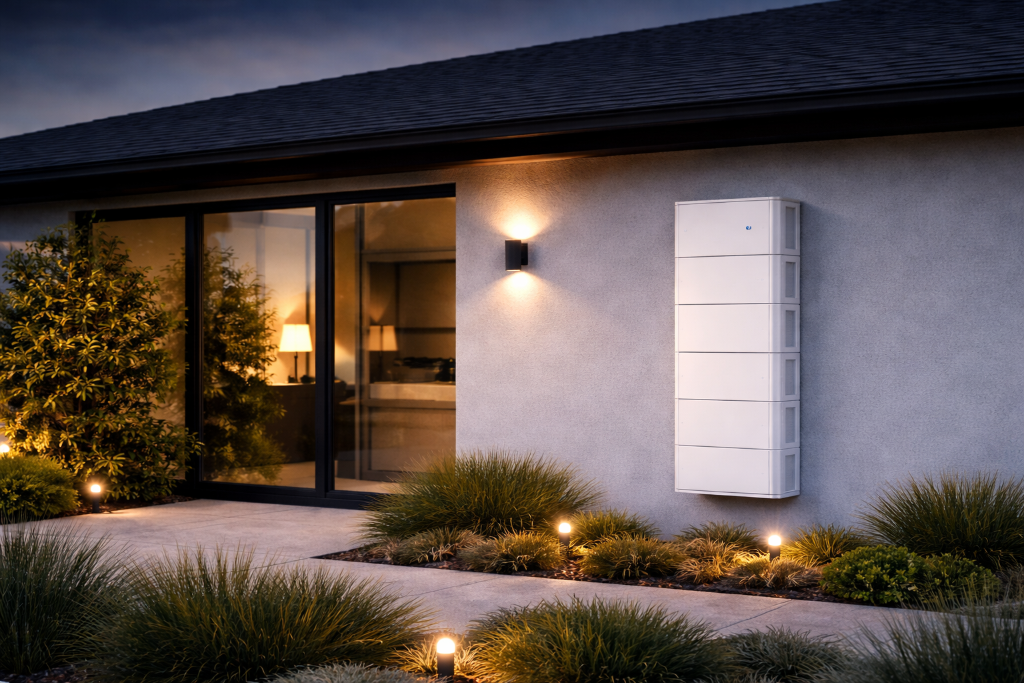
When combined with a battery storage system, a solar installation can operate in an islanded mode during grid outages. The sequence of events is as follows:
- The system detects grid failure, typically within milliseconds.
- The inverter disconnects from the utility grid and transitions the home's circuits to battery power.
- The battery supplies power to designated loads — either critical circuits or whole-home, depending on system configuration.
- Solar panels continue generating electricity during daylight hours, automatically recharging the battery to sustain backup operations.
- When the grid is restored, the system reconnects automatically and resumes normal grid-tied operation.
This entire process occurs without any action required from the homeowner.
Load Management and System Sizing
The duration and scope of backup coverage depend on battery capacity and the loads being supported. Common configurations include:
- Essential load backup: Refrigeration, lighting, device charging, and medical equipment. This configuration is highly energy-efficient and can support extended outages even with a single battery unit.
- Whole-home backup: Includes central air conditioning at normal operation. This configuration requires greater battery capacity but is achievable through properly sized system design.
With solar actively recharging the battery during daylight hours, a well-sized system can provide indefinite backup coverage through extended outages including multi-day weather events.
The Value of Energy Independence
Beyond outage protection, a solar-plus-battery system reduces your household's dependence on the utility grid for routine daily energy needs. This independence protects against ongoing utility rate increases and provides a stable, predictable energy cost structure over the 25+ year life of the system.