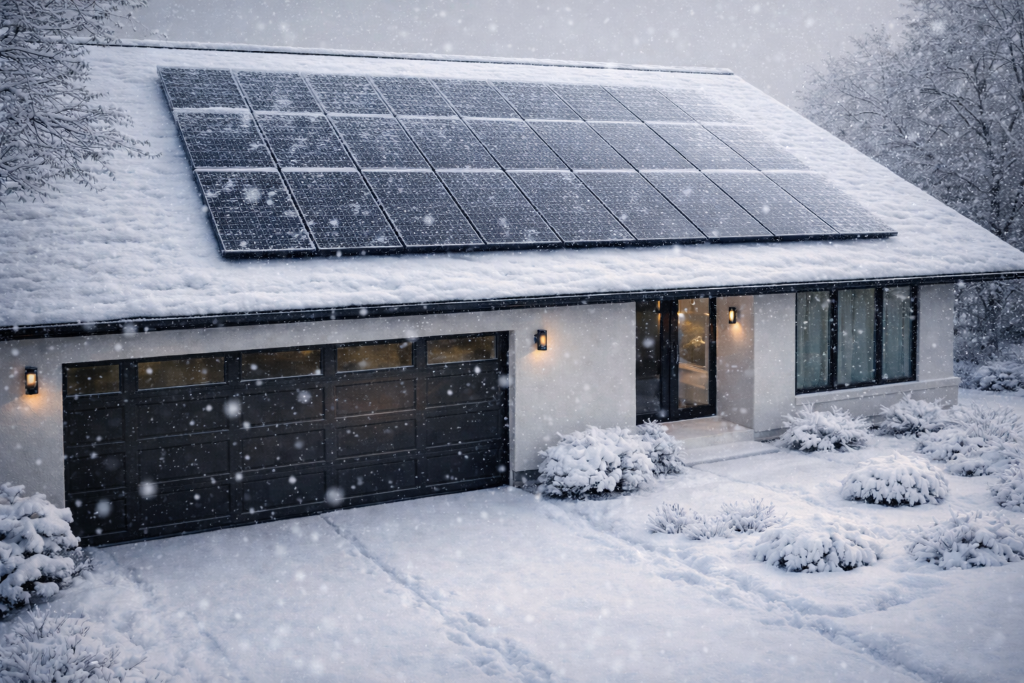
How Weather Affects Solar Panel Output
A common question among prospective solar customers is how panels perform during Texas winters and inclement weather. Understanding the relationship between weather conditions and solar output helps homeowners form accurate expectations and appreciate the true annual value of their system.
Solar Panels and Winter Conditions
Solar panels do not require heat to generate electricity — they require light. Photovoltaic cells convert solar radiation into electricity regardless of ambient temperature. In fact, cold, clear winter days often produce efficient solar generation because lower temperatures improve the electrical conductivity of silicon cells, partially offsetting the shorter daylight hours of winter months.
In the Rio Grande Valley and most of Texas, winter days are typically clear and mild. Annual solar resource data for the region shows that winter months, while producing lower daily generation totals due to shorter daylight hours and lower sun angles, remain productive for solar generation.
Cloudy and Overcast Conditions
Solar panels generate electricity under diffuse light conditions, though at reduced output relative to direct sunlight. On a fully overcast day, panel output may be 10–25% of clear-sky capacity. On a partly cloudy day, output varies dynamically as clouds pass. These periods of reduced production are accounted for in the annual energy yield projections provided as part of every Solergy system proposal.
Rain
Rain does not impair solar generation — panels continue operating during rainfall at reduced efficiency due to reduced light levels. An additional benefit of rainfall is natural panel cleaning: precipitation rinses accumulated dust, pollen, and particulate matter from panel surfaces, often improving output in the days following a rain event.
Snow and Ice
Significant snowfall on panel surfaces temporarily reduces output to negligible levels. However, heavy snow is infrequent across most of Texas, and typical accumulations melt or slide from panel surfaces within a short period of time. Ice accumulation is similarly transient. In most Texas winters, the total energy loss attributable to snow or ice is a small fraction of annual system yield. Annual production estimates from Solergy reflect historical weather patterns for your specific location.
Year-Round System Performance
Solar system proposals prepared by Solergy use location-specific meteorological data to project monthly and annual energy generation across all weather conditions. Homeowners receive a realistic estimate of annual savings that accounts for seasonal variation — including winter months — providing a complete and accurate picture of the investment's financial return.